Showing posts with label GMOs. Show all posts

Monday, April 29, 2013

Commissioner Troxler: How will you protect sustainable farms?

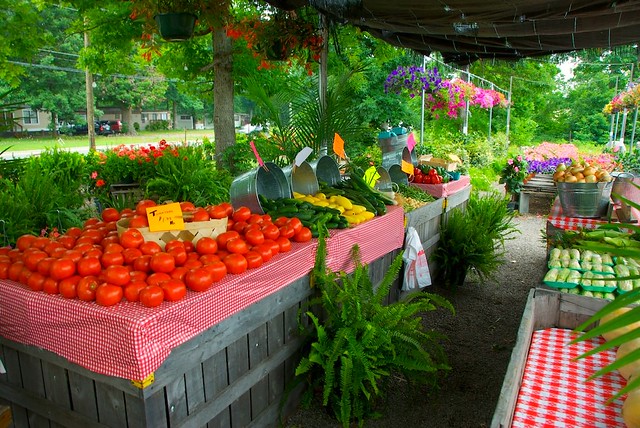
Photo by haansgruber via Flickr
by Fawn Pattison, Executive Director

Were you one of the thousands of concerned North Carolinians who read about House Bill 379 and contacted Agriculture Commissioner Steve Troxler recently?

House Bill 379, An Act To Clarify The Authority Of The Board Of Agriculture Over Plants would strip authority away from local governments to regulate plants. Why? Because back in 2004, three California counties passed local ordinances banning the cultivation of genetically-modified organisms (GMOs). That act set off a wave of "pre-emption" bills across the country, as the multinational corporations who sell GMO seeds to farmers sought to make sure that the movement to ban GMOs never left California.

We've been calling H 379 a zombie bill, because it returned from the dead after an unsuccessful effort to pass it back in 2005. If you emailed Commissioner Troxler, you probably got a response back recently that says:

"Some of the information you have received from Toxic Free NC about this bill is not correct. We support and promote small farms and organic growers, and there is nothing in this bill that would harm organic growers or small farms."

The good folks at the Department of Agriculture are clearly interpreting the language in this bill differently than we are. That's understandable -- it's a very short bill, with very broad language. They don't see any reason for small farmers or organic farmers to be concerned about harms. Did they ask any? 


Here's what Jamie Ager of Hickory Nut Gap Farm near Asheville had to say about the bill in a recent news story: 

"Stay out of the way," he [Ager] warned. "You know, we don't need more regulatory burden on creating a food system that consumers are demanding." Ager is worried that H 379 is a tool to increase the level of control that a small number of multinational corporate seed and chemical companies already exert over our food supply. We think he's exactly right. 

Troxler's email goes on to say:
"In North Carolina, farmers have chosen to plant nearly three million acres of crops produced from seed that would be considered “genetically-modified”. That includes 96 percent of all cotton, 93 percent of all soybeans, and 85 percent of all corn."
Wow. That's a lot of genetically-modified crops. Whatever your position on genetically-modified crops, it would be imprudent for local governments in North Carolina to try to prohibit farmers from growing them (which is probably why none of them ever have, to the best of our knowledge). Toxic Free NC has certainly never encouraged a local government to do so, and has no plans to try. Yet the Department of Agriculture's staff stated in legislative hearings in 2005 (when this same bill was first filed) that the bill came about because of the GMO ban in Mendocino, California, and was intended to prevent North Carolina's local governments from ever doing the same. This is a solution in search of a problem.  

Growing a strong, vibrant organic agriculture sector in North Carolina depends on protecting the organic certification of our farmers. Anything that puts that certification at risk - including contamination from GMO crops, and pesticide drift from neighboring farms, for example - is a risk that should be taken seriously. Filing a bill like H 379, and then dismissing valid criticisms, shows just how little heed the NC Department of Agriculture pays those risks - particularly when lobbyists from the likes of Monsanto show up asking for a favor. 

Meanwhile, in our state legislative efforts are also underway to eliminate the NC Sustainable Local Food Advisory Council, ensure that farmers don't necessarily have to pay fines when they violate pesticide regulations, and eliminate or slash funding from state programs that have benefited small, local farmers, such as the Golden LEAF Foundation and the NC Tobacco Trust Fund. H 379 is certainly not the only example of the NC Department of Agriculture's legislative agenda leaving sustainable and organic farmers out in the cold. It's just the one that got a lot of attention because we used a picture of a zombie in the action alert. 

I'm glad we got your attention, Commissioner Troxler. Now please explain to us why on earth this bill is needed, and how you plan to make sure that organic and sustainable farmers are not harmed by it?


Update: 
H 379 passed the NC House on April 30, with a vote of 93-23. See how your Representative voted here. A companion bill, S 639, has already passed the Senate. We expect the two versions to be reconciled soon and sent to Governor McCrory for his signature.


Tuesday, March 26, 2013

Zombie Attack on North Carolina Organics

NC Department of Agriculture brings 2005 Frankenfood legislation back from the dead.

by Fawn Pattison, Executive Director
Photo by Grmisiti via Flickr

The NC Department of Agriculture has revived a bill from 2005 that directly threatens organic agriculture and small farmers in North Carolina. H 379,“Clarify Board of Ag Authority/Plants,” uses an innocuous title to launch an offensive on anyone who grows a crop in North Carolina without a corporate patent on it. Rep. Langdon (R-Johnston), chair of the Agriculture Committee, has filed the bill in the NC House of Representatives.

Here we go again. A nearly identical bill called “Plant Regulation” was filed on behalf of the NC Department of Agriculture in 2005. Like its undead counterpart, H379 would prevent any government entities – local governments in particular – from enacting any ordinance or legislation to restrict the sale or cultivation of any plant in NC, reserving that authority solely for the NC Board of Agriculture. 


Here’s a good question… Why?

Have any North Carolina cities or counties attempted to restrict genetically-modified crops, the way four California counties did in 2004? No. But that’s what triggered this inane legislation the first time around, when identical language was enacted into law in 15 different states.

So what’s the problem?

Genetic material from GMO crops can contaminate neighboring crops:


  • Monsanto and other companies have aggressively defended their patents, to the point of suing farmers for patent infringement when they save and re-plant seeds that have been contaminated with genetic material from neighboring crops.
  • Genetic drift can make a farmer’s crop unsaleable in places like the European Union, which has tougher restrictions on GMO crops. Genetic drift can also harm a farmer’s organic certification.

The bill also has fallout for local governments, who would be prevented from restricting the sale or cultivation of invasive species that may be affecting them locally. It could even prevent local governments from enacting notification policies to protect organic farmers from genetic drift, according to the Center for Rural Affairs.

When this legislation was first introduced in 2005, the NC Senate inserted language to protect small farmers and organic neighbors from the potential damage. The result? The bill was killed, and Dr. Frankenstein returned defeated to his lab… apparently to wait for a more favorable environment in which to raise this bill from the dead.
 

The effect of H 379 will be to further concentrate corporate control over food and farming. It’s clear why a bill like this might be good for the likes of Monsanto, but how is it really good for farmers?

Monday, April 12, 2010

Tips for Avoiding Genetically Modified Foods


Guest post by Toxic Free NC volunteer Hayes Simpson

For a long while now, I have carried around an index card in my wallet billfold, which contains a list handwritten by my own dear Mama. The list includes the top fruits and veggies to buy organic (as in the Shopper's Guide to Pesticides in Produce from Environmental Working Group). She also listed fish and shellfish that contain fewer toxins (as in the Seafood Selector from Environmental Defense Fund).

I’m sure that many of you are familiar with these lists and others like them, and they may have changed your buying habits in a big way, or maybe just when it comes to certain staple foods, such as apples, spinach, and potatoes. I'll admit that it was only once in a while that I remembered to check my Mama's list.

But another closely-related food issue has caused me to stop consuming sodas, and to “floor-it” when my stomach is grumbling and the golden arches are beckoning. I am talking about the unsavory subject of GMO’s which until recently brought to my mind visions of acres of picture-perfect, bright yellow, completely inedible corn, and futuristic, square watermelons stacked neatly into a towering pyramid for display purposes.

I was lucky enough to be introduced to some information that really helped me to put my limited knowledge about organic food shopping and genetically modified foods into context. It started when I was shown a clip from the film, Everything you HAVE TO KNOW about Dangerous Genetically Modified Foods.

I learned that, in fact, the crops that are most likely to be genetically modified are corn, soybeans, canola, and cotton. Very few fresh fruits and veggies sold in the U.S. currently are genetically modified, but did you know that there are dozens of common ingredients derived from the big four GM crops that may be genetically modified? In the words of my two year old, “Ewwwww!” So the best advice for keeping GMOs off your plate is to read labels, and know that anything containing one of these ingredients is questionable, unless of course the product is marked "certified organic" or "non-GMO."

The film explains that there are a some very serious health concerns about genetically modified ingredients, including the potential to cause allergies. More information is available at: http://www.responsibletechnology.org They also provide an excellent Non-GMO Shopping Guide (in case your Mama hasn’t already made you one.)

Good luck, and eat well!