Showing posts with label NC Department of Agriculture. Show all posts

Monday, October 7, 2013

The Bees are speaking: It's time to act

By Jean Strandberg & Fawn Pattison

Bombus terrestris, the beloved bumblebee
This October, Toxic Free NC is focusing on our friends, the pollinators. Unless you've been living under a rock, you've probably heard that domestic honeybee populations have plummeted in recent years. Farmers in North Carolina and across the US face a dramatic shortage of hives to pollinate their crops. Nearly half the managed beehives in NC have been lost since the mid-1980’s.

But did you know that wild pollinators are even worse off? While their populations are hard to track, biologists estimate that wild pollinators have suffered a 95% population decline in NC in the same time period. New research shows that wild pollinators are even more important to our food supply than domesticated bees. A recent study looking at 40 different crops across the globe showed that wild pollinators are twice as effective as honeybees in their pollination efforts. This is in part due to the variety of pollination techniques used by wild pollinators, as well as a tendency to cross-pollinate (honeybees usually pollinate within a single plant). 

We must act now to stop the pollinator collapse, or we will be very hungry people before long. We're already seeing the effects of fewer pollinators on the planet. Yields in crops that do not require pollination are growing at a much faster rate than those that do, and more and more farmers are finding it necessary to rent hives from around the country to ensure the success of their crops. Among crops requiring pollination are some of our favorite foods: cucumbers, almonds, blueberries, watermelon, apples, strawberries, melons and peaches all require pollination. If we fail to address the causes of these losses, we may soon have to give up many of the foods we love.

But many voices are telling us not to act. Pesticide makers argue loudly that their chemicals aren't to blame. They pay troops of scientists to create data that distract our attention from the harmful effects of agrochemicals on bees, butterflies and birds. But agrochemicals like the widely used class of insecticide, neonicotinoids, are strongly linked to declines in honey and bumblebee populations. There are plenty of other contributing factors besides pesticides, of course.

Hang around any beekeeper, and you’re sure to hear about the Varroa mite’s attack on their hives, introducing RNA viruses that disrupt hive function and can eventually lead to colony collapse. Climate change has been linked to an increasing incongruity between when bees are active and when flowers are in bloom. Pesticides, pathogens, climate change, decreased crop diversity and habitat destruction all play a part, individually, and in combination. 

But having many factors involved is no excuse to sit back and let a disaster happen. We must act now to fix what we can! The overuse of pesticides is a huge contributor to these declines. Pesticides kill beneficial insects and pollinators like bees and butterflies that are necessary to provide a healthy ecosystem where we can thrive. Pollination is required for three-quarters of global food crops, and one of the things we can do right now to conserve these essential pollinators is to use fewer pesticides.


The US Department of Agriculture, and our state Commissioner of Agriculture should be acting fast to promote farm technology that protects pollinators: More organic farming, more Integrated Pest Management, ending the use of pesticides most highly toxic to bees, and creating incentives for farmers to diversify crops and provide more pollinator habitat. The pollinator collapse is a man-made disaster, and one that we can stop if we choose to. Let's choose wisely.

Monday, April 29, 2013

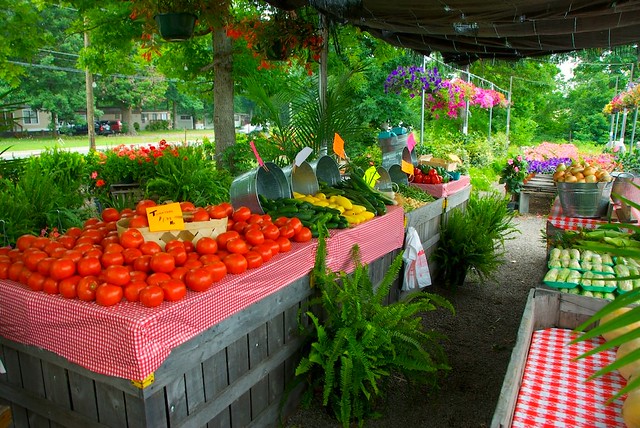
Commissioner Troxler: How will you protect sustainable farms?

Photo by haansgruber via Flickr
by Fawn Pattison, Executive Director

Were you one of the thousands of concerned North Carolinians who read about House Bill 379 and contacted Agriculture Commissioner Steve Troxler recently?

House Bill 379, An Act To Clarify The Authority Of The Board Of Agriculture Over Plants would strip authority away from local governments to regulate plants. Why? Because back in 2004, three California counties passed local ordinances banning the cultivation of genetically-modified organisms (GMOs). That act set off a wave of "pre-emption" bills across the country, as the multinational corporations who sell GMO seeds to farmers sought to make sure that the movement to ban GMOs never left California.

We've been calling H 379 a zombie bill, because it returned from the dead after an unsuccessful effort to pass it back in 2005. If you emailed Commissioner Troxler, you probably got a response back recently that says:

"Some of the information you have received from Toxic Free NC about this bill is not correct. We support and promote small farms and organic growers, and there is nothing in this bill that would harm organic growers or small farms."

The good folks at the Department of Agriculture are clearly interpreting the language in this bill differently than we are. That's understandable -- it's a very short bill, with very broad language. They don't see any reason for small farmers or organic farmers to be concerned about harms. Did they ask any? 


Here's what Jamie Ager of Hickory Nut Gap Farm near Asheville had to say about the bill in a recent news story: 

"Stay out of the way," he [Ager] warned. "You know, we don't need more regulatory burden on creating a food system that consumers are demanding." Ager is worried that H 379 is a tool to increase the level of control that a small number of multinational corporate seed and chemical companies already exert over our food supply. We think he's exactly right. 

Troxler's email goes on to say:
"In North Carolina, farmers have chosen to plant nearly three million acres of crops produced from seed that would be considered “genetically-modified”. That includes 96 percent of all cotton, 93 percent of all soybeans, and 85 percent of all corn."
Wow. That's a lot of genetically-modified crops. Whatever your position on genetically-modified crops, it would be imprudent for local governments in North Carolina to try to prohibit farmers from growing them (which is probably why none of them ever have, to the best of our knowledge). Toxic Free NC has certainly never encouraged a local government to do so, and has no plans to try. Yet the Department of Agriculture's staff stated in legislative hearings in 2005 (when this same bill was first filed) that the bill came about because of the GMO ban in Mendocino, California, and was intended to prevent North Carolina's local governments from ever doing the same. This is a solution in search of a problem.  

Growing a strong, vibrant organic agriculture sector in North Carolina depends on protecting the organic certification of our farmers. Anything that puts that certification at risk - including contamination from GMO crops, and pesticide drift from neighboring farms, for example - is a risk that should be taken seriously. Filing a bill like H 379, and then dismissing valid criticisms, shows just how little heed the NC Department of Agriculture pays those risks - particularly when lobbyists from the likes of Monsanto show up asking for a favor. 

Meanwhile, in our state legislative efforts are also underway to eliminate the NC Sustainable Local Food Advisory Council, ensure that farmers don't necessarily have to pay fines when they violate pesticide regulations, and eliminate or slash funding from state programs that have benefited small, local farmers, such as the Golden LEAF Foundation and the NC Tobacco Trust Fund. H 379 is certainly not the only example of the NC Department of Agriculture's legislative agenda leaving sustainable and organic farmers out in the cold. It's just the one that got a lot of attention because we used a picture of a zombie in the action alert. 

I'm glad we got your attention, Commissioner Troxler. Now please explain to us why on earth this bill is needed, and how you plan to make sure that organic and sustainable farmers are not harmed by it?


Update: 
H 379 passed the NC House on April 30, with a vote of 93-23. See how your Representative voted here. A companion bill, S 639, has already passed the Senate. We expect the two versions to be reconciled soon and sent to Governor McCrory for his signature.